
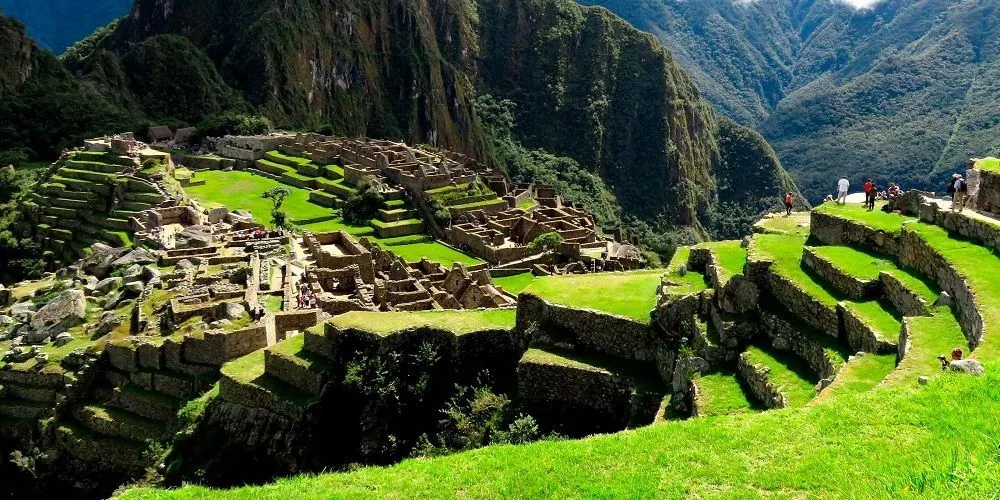
Traveling to Machu Picchu during the rainy season offers a completely different experience from visiting during the dry months. The surrounding mountains become intensely green, clouds move dramatically through the valley, waterfalls appear along the railway and the archaeological site often feels more mysterious.
The rainy season requires additional preparation, but it does not mean that Machu Picchu is inaccessible or that it rains continuously throughout the day. Thousands of travelers visit during this period and enjoy memorable journeys through Cusco, the Sacred Valley and Aguas Calientes.
The key is to prepare for changing weather, choose the right transportation, pack suitable clothing and maintain a flexible itinerary.
When Is the Rainy Season in Machu Picchu?
The rainy season in the Cusco and Machu Picchu region generally extends from November to March.
Rainfall usually becomes more frequent during:
- December
- January
- February
- March
January and February are often among the wettest months. However, weather conditions can vary from one day to another.
A typical rainy-season day may include:
- A clear or cloudy morning
- Short periods of sunshine
- Clouds developing around the mountains
- Afternoon rain
- Brief heavy showers
- Mist around the archaeological site
- Cooler temperatures after rainfall
Rain does not necessarily continue throughout the entire day. Some travelers may experience only a short shower, while others may encounter several hours of rain.
Is Machu Picchu Open During the Rainy Season?
Machu Picchu normally remains open throughout the year, including the rainy season.
Visitors can continue to access the archaeological site through the official circuits and routes available for their travel date.
However, weather conditions can occasionally affect:
- Train schedules
- Road transportation
- Mountain trails
- Visibility
- Access to seasonal routes
- Hiking times
- Outdoor tour operations
Travelers should confirm their transportation and entrance arrangements before departure.
Is It Worth Visiting Machu Picchu During the Rainy Season?
Machu Picchu is worth visiting during the rainy season, especially for travelers who appreciate green landscapes, dramatic clouds and fewer visitors.
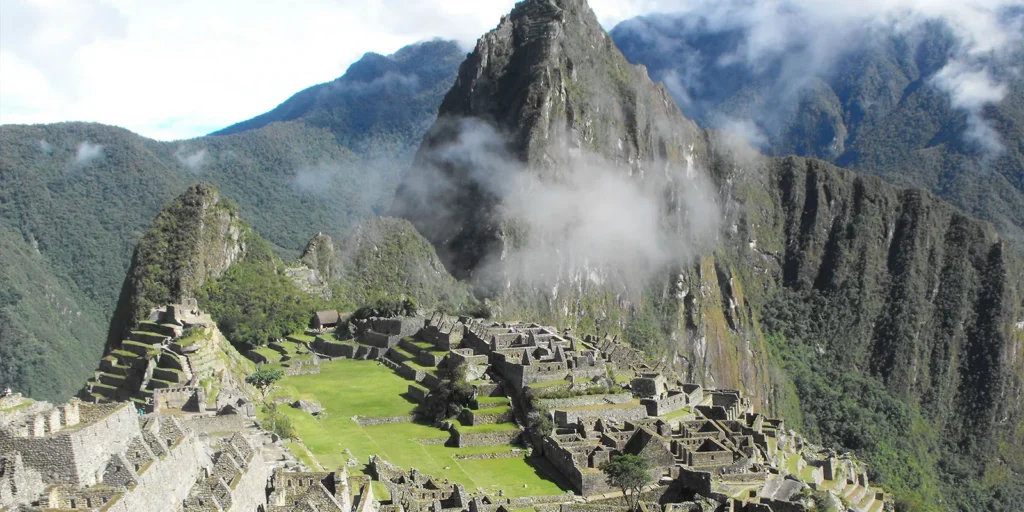
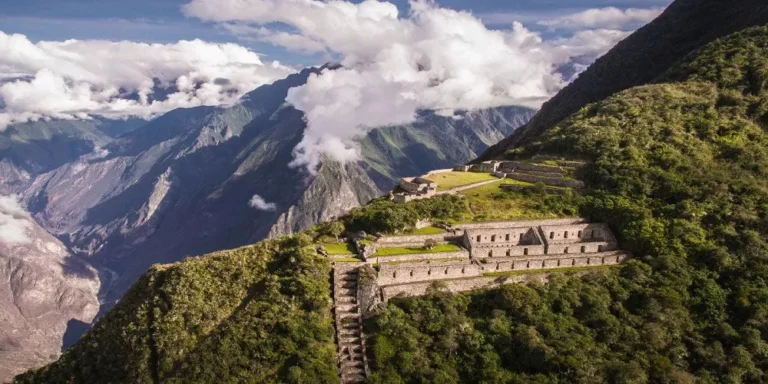
The experience can be more atmospheric than during the dry season. Clouds often move quickly through the mountains, revealing and hiding different parts of the citadel.
Advantages include:
- Greener mountain scenery
- Fewer visitors during certain periods
- More hotel availability
- Dramatic photography
- Waterfalls along the railway route
- Lush vegetation
- A quieter atmosphere
- More flexible accommodation options
The main disadvantage is that clear panoramic views are not guaranteed.
Advantages of Visiting During the Rainy Season
Green and Colorful Landscapes
Rain transforms the mountains surrounding Machu Picchu.
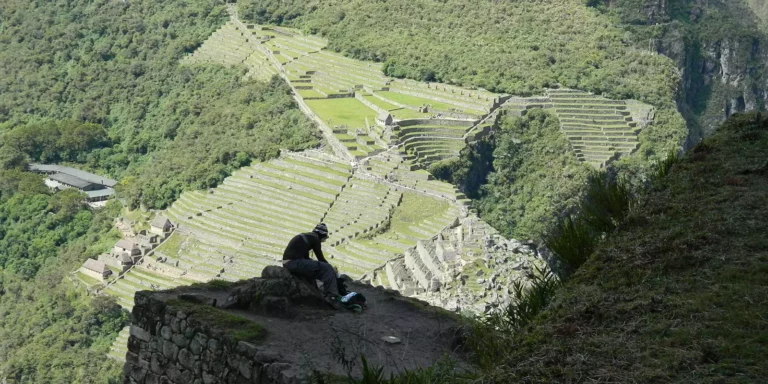
The cloud forest becomes greener, the agricultural terraces appear more vibrant and small waterfalls can be seen along the train route.
This is an excellent season for travelers interested in:
- Nature
- Landscape photography
- Cloud-forest vegetation
- Waterfalls
- Atmospheric mountain views
- Green archaeological terraces
Fewer Visitors
The rainy season generally receives fewer visitors than the busiest dry-season months.
This may provide:
- Shorter lines
- A calmer archaeological visit
- More hotel choices
- Better availability for some tours
- Less crowded trains
- A more relaxed experience
Christmas, New Year and other holiday periods can still be busy, so advance booking remains important.
Dramatic Photography
Rainy-season photography can be unpredictable but beautiful.
Clouds, mist and changing light create unusual views of:
- Huayna Picchu
- The agricultural terraces
- The surrounding valleys
- The Urubamba River
- The mountain peaks
- The stone structures
Visitors should not expect perfectly clear skies throughout the visit. Instead, they should be prepared to photograph changing weather conditions.
Potentially Lower Travel Costs
Some hotels and tourism services may offer more competitive prices during quieter rainy-season periods.
Travelers may find:
- Greater room availability
- More accommodation choices
- Reduced pressure to reserve certain services
- Flexible travel packages
Entrance tickets and transportation should still be arranged early, particularly when specific circuits or schedules are required.
Challenges of Rainy-Season Travel
Reduced Visibility
Clouds can partially or completely cover Machu Picchu.
Visibility may change within minutes. A viewpoint that appears completely covered can become clear shortly afterward.
Travelers should:
- Remain patient
- Allow enough time at viewpoints
- Avoid leaving immediately when clouds appear
- Protect cameras from moisture
- Be prepared for changing light
A rainy or cloudy visit is still valuable because the archaeological structures remain impressive even without a completely clear panoramic view.
Slippery Paths
Machu Picchu contains:
- Stone steps
- Uneven surfaces
- Narrow paths
- Inclined walkways
- Outdoor terraces
Rain can make these surfaces slippery.
Visitors should walk slowly, use handrails where available and wear shoes with good traction.
Avoid footwear with smooth soles.
Transportation Delays
Heavy rain can occasionally affect transportation between Cusco, Ollantaytambo and Machu Picchu.
Possible delays may involve:
- Road traffic
- Train departures
- Bus transportation
- Tour pickups
- Walking routes
Travelers should avoid making very tight connections between their Machu Picchu visit, return train and flight.
Muddy Hiking Trails
Treks and mountain routes may become more difficult during the rainy season.
Mud, wet stones and reduced visibility can increase the physical challenge.
Travelers planning hiking routes should prepare for:
- Slower walking speeds
- Wet equipment
- Slippery descents
- Cold rain
- Limited mountain views
- Possible itinerary adjustments
How to Get to Machu Picchu During the Rainy Season
Traveling by Train
The train is generally the most practical way to reach Machu Picchu during the rainy season.
A typical journey includes:
- Transportation from Cusco to Ollantaytambo
- Train from Ollantaytambo to Aguas Calientes
- Bus from Aguas Calientes to Machu Picchu
- Return through the same route
Depending on the service and seasonal conditions, some journeys may use combined bus-and-train transportation.
Travelers should carefully coordinate:
- Hotel pickup
- Train departure time
- Arrival in Aguas Calientes
- Machu Picchu entrance time
- Bus transportation
- Return train
- Arrival in Cusco
Always leave enough time between each connection.
Traveling From Cusco
Traveling from Cusco to Machu Picchu in one day is possible, but the itinerary is long.
A full-day journey may require:
- Very early hotel pickup
- Road transportation
- Train travel
- Bus transportation
- Guided visit
- Return train
- Late arrival in Cusco
During the rainy season, unexpected delays can make this itinerary more stressful.
A two-day journey is usually more comfortable.
Traveling From Ollantaytambo
Staying in Ollantaytambo before taking the train can reduce the amount of early-morning road travel.
Advantages include:
- Easier access to the train station
- Less pressure on departure day
- Lower altitude than Cusco
- Time to explore the Sacred Valley
- More convenient morning train options
Ollantaytambo is an excellent base for travelers who want to combine the Sacred Valley with Machu Picchu.
Traveling Through Hidroeléctrica
Some travelers reach Aguas Calientes by road through Hidroeléctrica and then walk beside the railway.
This route may be more difficult during the rainy season because it involves:
- A long road journey
- Curving mountain roads
- Possible rain-related delays
- A walk of several hours
- Wet or muddy conditions
- Greater exposure to the weather
The Hidroeléctrica route should not be combined with a tightly scheduled Machu Picchu entrance on the same day.
Most travelers stay overnight in Aguas Calientes before visiting the archaeological site.
Should You Stay Overnight in Aguas Calientes?
Staying overnight in Aguas Calientes is strongly recommended during the rainy season.
It provides:
- More time to rest
- Less pressure around train schedules
- Easier access to an early entrance
- Greater flexibility if transportation is delayed
- Time to prepare rain equipment
- A more relaxed return journey
A typical two-day itinerary may follow this structure:
Day 1
- Travel from Cusco to Ollantaytambo
- Take the train to Aguas Calientes
- Check into the hotel
- Meet the guide
- Explore the town
- Prepare for the following morning
Day 2
- Take the bus to Machu Picchu
- Complete the selected circuit
- Return to Aguas Calientes
- Have lunch
- Take the return train
- Travel back to Cusco
What Is the Best Entrance Time?
Morning entrances are popular because travelers may have more time to complete their itinerary before possible afternoon rain.
However, early mornings can also be cloudy or misty.
There is no entrance time that guarantees clear weather.
Morning advantages may include:
- Cooler temperatures
- More time before the return train
- Greater flexibility after the visit
- A quieter atmosphere
- More time for clouds to clear
Later entrances may provide:
- Fewer early departures
- Additional rest
- Changing afternoon light
- The possibility of morning clouds clearing
Choose the entrance time according to your train schedule, circuit and overnight arrangements rather than depending entirely on the weather forecast.
Choosing a Machu Picchu Circuit During the Rainy Season
Each Machu Picchu circuit offers a different experience.
Circuit 1: Panoramic Views
Circuit 1 focuses on upper terraces and panoramic viewpoints.
It may be suitable for travelers who want:
- The classic Machu Picchu photograph
- Elevated views
- Landscape photography
- A shorter archaeological route
Rain and clouds may affect visibility more strongly on panoramic routes.
Mountain options can also become more demanding when the steps are wet.
Circuit 2: Classic Route
Circuit 2 is generally one of the most complete options for first-time visitors.
It combines:
- Panoramic areas
- Agricultural terraces
- Archaeological structures
- Ceremonial spaces
- Residential sectors
Circuit 2 remains a strong rainy-season choice because visitors can enjoy both the landscape and the archaeological city.
Circuit 3: Lower Archaeological Areas
Circuit 3 explores lower areas of Machu Picchu and may include mountain routes.
It can be a practical option when clouds cover the highest viewpoints because visitors spend more time close to archaeological structures.
Some Circuit 3 routes include:
- Huayna Picchu
- Huchuy Picchu
- Lower royal sectors
- Additional mountain paths
Mountain routes require additional caution in wet conditions.
Can You Climb Huayna Picchu During the Rainy Season?
Huayna Picchu may be accessible during the rainy season when the route is operating normally.
However, the hike includes:
- Steep stone steps
- Narrow paths
- Exposed sections
- Wet surfaces
- Limited shelter
- Significant elevation changes
Travelers should consider their physical condition and comfort with heights.
Huayna Picchu may not be suitable during heavy rain for visitors who:
- Are afraid of heights
- Have poor balance
- Lack hiking experience
- Have mobility limitations
- Do not have appropriate footwear
Always follow official instructions and local weather-related restrictions.
Can You Hike Machu Picchu Mountain?
Machu Picchu Mountain is generally a longer climb than Huayna Picchu.
During the rainy season, travelers should expect:
- Wet stone steps
- Cloudy viewpoints
- Rain exposure
- Longer walking times
- Greater physical effort
The hike can still be rewarding, but panoramic views are not guaranteed.
The Inca Trail During the Rainy Season
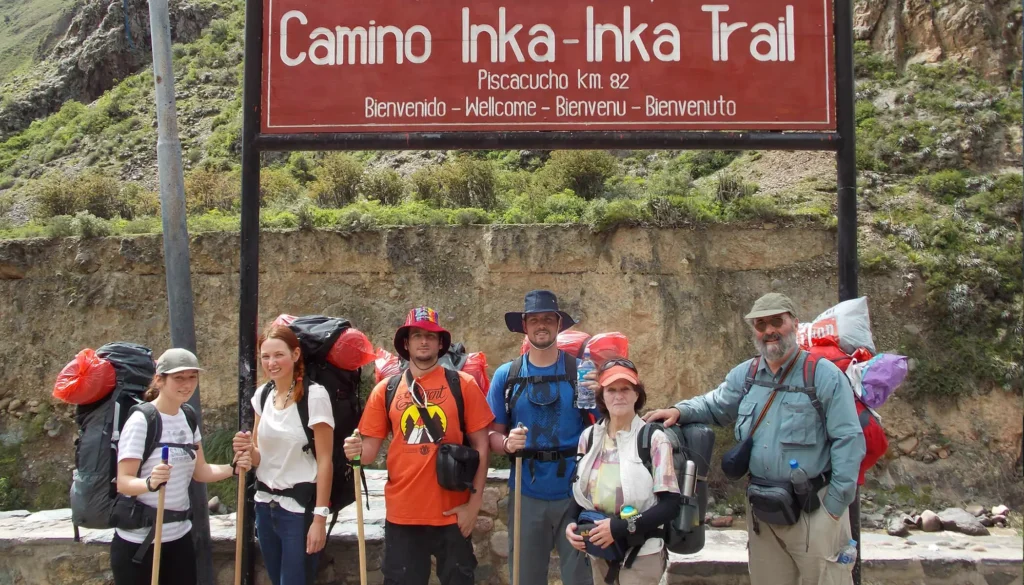
The Classic Inca Trail normally operates during most of the rainy season but is traditionally closed during February for maintenance and conservation work.
Travelers considering the Inca Trail during wet months should prepare for:
- Mud
- Rain
- Wet camping equipment
- Slippery stone paths
- Cold mountain conditions
- Cloudy viewpoints
- Changes in walking speed
The advantages may include greener landscapes and fewer hikers.
The Salkantay Trek During the Rainy Season
The Salkantay Trek may continue to operate during parts of the rainy season, but conditions can be more demanding.
Possible challenges include:
- Heavy rain
- Muddy trails
- Cold temperatures at high altitude
- Snow or hail
- River changes
- Reduced visibility
- Difficult descents
Travelers should choose an experienced operator and bring appropriate waterproof equipment.
December and March may be more manageable than the wettest weeks, but weather remains unpredictable.
What to Wear at Machu Picchu During the Rainy Season
The most practical strategy is to dress in layers.
A useful clothing system includes:
- A breathable base layer
- A light fleece or sweater
- A waterproof outer jacket
- Quick-drying trousers
- Shoes with good traction
Temperatures can feel warm while walking and cooler when rain or wind begins.
Avoid heavy cotton clothing because it absorbs water and dries slowly.
What to Pack
Bring a small backpack containing:
- Original passport
- Machu Picchu entrance ticket
- Train ticket
- Waterproof jacket
- Lightweight poncho
- Quick-drying clothing
- Comfortable hiking shoes
- Extra socks
- Sun hat
- Sunglasses
- Sunscreen
- Insect repellent
- Reusable water bottle
- Personal medication
- Portable charger
- Waterproof pouch for documents
- Backpack rain cover
Do not assume that cloudy weather eliminates the risk of sun exposure. Ultraviolet radiation can remain strong in the Andes.
How to Protect Your Phone and Camera
Humidity and rain can damage electronic equipment.
Protect your devices by carrying:
- Waterproof phone case
- Sealed plastic pouch
- Backpack rain cover
- Dry cloth
- Lens cloth
- Small waterproof camera bag
- Extra battery or portable charger
Avoid changing camera lenses during heavy rain.
After returning to the hotel, allow wet equipment to dry before storing it inside a closed bag.
Footwear for Wet Conditions
Good footwear is one of the most important rainy-season preparations.
Choose shoes with:
- Strong grip
- Comfortable support
- Water resistance
- Secure laces
- A stable sole
Avoid:
- Smooth-soled shoes
- Open sandals
- New shoes that have not been tested
- Heavy footwear that takes a long time to dry
- Uncomfortable fashion shoes
Carry an extra pair of socks in a waterproof bag.
Using the Bus From Aguas Calientes
Most travelers take the bus from Aguas Calientes to the Machu Picchu entrance.
During rainy periods:
- Lines may form under wet conditions.
- The road may be slower.
- Windows can become foggy.
- Travelers should arrive early.
- Rain protection should remain accessible.
Do not pack your rain jacket at the bottom of your backpack.
Walking From Aguas Calientes
Walking from Aguas Calientes to Machu Picchu involves a steep uphill route with many steps.
The walk can become more difficult in rain because of:
- Wet stairs
- Mud
- Humidity
- Reduced visibility
- Physical fatigue
Travelers completing a long circuit or mountain hike may prefer to save energy by using the bus.
Should You Hire a Guide?
A professional guide is especially useful during the rainy season.
A guide can help with:
- Following the correct circuit
- Managing the available time
- Identifying important structures
- Adjusting the pace
- Finding suitable viewpoints
- Understanding weather-related changes
- Coordinating transportation
Guides also provide historical and cultural explanations that cannot be obtained simply by walking through the site.
Rainy-Season Photography Tips
Rainy conditions can produce exceptional photographs.
For better results:
- Photograph the site when clouds begin to move.
- Protect the lens between shots.
- Use a cloth to remove water droplets.
- Avoid keeping the camera exposed during heavy rain.
- Be patient at panoramic viewpoints.
- Photograph terraces and structures when the mountains are hidden.
- Use changing mist as part of the composition.
- Keep batteries warm and dry.
A completely clear postcard photograph should not be the only goal of the visit.
Food and Water Planning
Food cannot normally be consumed freely inside the archaeological site.
Before entering:
- Eat breakfast in Aguas Calientes.
- Carry drinking water in an appropriate reusable container.
- Plan lunch after returning to town.
- Avoid a very heavy meal before mountain routes.
- Keep snacks for use outside the restricted area.
Visitors with special dietary requirements should inform their hotel or tour operator in advance.
Altitude and Weather
Machu Picchu is located at a lower altitude than Cusco, but many travelers begin their journey in high-altitude areas.
Cusco sits at approximately 3,400 meters above sea level, while mountain treks may climb much higher.
Before traveling to Machu Picchu:
- Spend time acclimatizing in Cusco or the Sacred Valley.
- Drink enough water.
- Avoid excessive alcohol.
- Eat light meals.
- Sleep properly.
- Begin with easier activities.
- Avoid demanding hikes immediately after arriving.
Rain and cold can make altitude discomfort feel more intense.
Suggested Four-Day Rainy-Season Itinerary
Day 1: Arrival in Cusco
- Transfer to the hotel
- Rest
- Walk slowly through the historic center
- Eat a light meal
- Prepare warm and waterproof clothing
Day 2: Cusco City Tour
- Visit Qorikancha
- Explore Sacsayhuaman
- Continue to Qenqo
- Visit Puka Pukara
- Finish at Tambomachay
Day 3: Sacred Valley and Aguas Calientes
- Travel through the Sacred Valley
- Visit Ollantaytambo
- Take the train to Aguas Calientes
- Check into the hotel
- Prepare for Machu Picchu
Day 4: Machu Picchu
- Take the morning bus
- Complete the selected circuit
- Return to Aguas Calientes
- Take the train to Ollantaytambo
- Return to Cusco
This itinerary provides more flexibility than attempting to visit Machu Picchu immediately after arriving in Cusco.
Common Mistakes to Avoid
Travelers should avoid:
- Assuming it will rain continuously
- Traveling without waterproof clothing
- Wearing smooth-soled shoes
- Scheduling tight transportation connections
- Expecting guaranteed clear views
- Carrying unprotected electronic equipment
- Booking a mountain route without evaluating fitness
- Visiting immediately after arriving at high altitude
- Depending entirely on weather applications
- Purchasing the train before confirming entrance availability
- Taking a return train too soon after the visit
- Forgetting an extra pair of socks
- Planning difficult treks without suitable equipment
What Happens If It Rains Heavily?
Machu Picchu may remain open during rain, but official authorities can restrict certain areas when conditions create a safety concern.
Travelers should follow instructions from:
- Archaeological-site personnel
- Professional guides
- Train operators
- Bus companies
- Tour operators
- Local authorities
Do not leave the designated route or attempt to enter a closed path.
Keep Your Itinerary Flexible
Flexibility is one of the most important elements of rainy-season travel.
Consider including:
- One additional day in Cusco
- An overnight stay in Aguas Calientes
- Enough time between trains
- Indoor activities as alternatives
- A flexible return schedule
- Travel insurance
Avoid scheduling an international flight immediately after returning from Machu Picchu.
Travel Insurance
Travel insurance can be useful when visiting during the rainy season.
A suitable policy may provide assistance with:
- Trip delays
- Cancellations
- Medical emergencies
- Lost luggage
- Missed connections
- Trekking incidents
- Transportation interruptions
Review the policy carefully, especially when planning mountain hikes or multi-day treks.
Is December a Good Month to Visit?
December can be a good month for travelers who want green landscapes and Christmas traditions in Cusco.
Visitors should expect:
- Increasing rainfall
- Lush scenery
- Holiday demand near Christmas
- Cloudy mountain conditions
- Possible afternoon showers
Reservations should be made early for the final weeks of December.
Is January a Good Month to Visit?
January is generally wetter and quieter than the main dry-season months.
It can provide:
- Green landscapes
- Fewer visitors
- Atmospheric photography
- More frequent rain
- Possible transportation delays
Travelers need a flexible itinerary and suitable waterproof clothing.
Is February a Good Month to Visit?
February is often one of the wettest months.
Machu Picchu normally remains accessible by train, but trekking conditions can be difficult.
The Classic Inca Trail is typically closed during February for maintenance.
Travelers should carefully evaluate mountain excursions and road-based routes.
Is March a Good Month to Visit?
March marks the later part of the rainy season.
Rain remains possible, but conditions may gradually begin to improve.
The region is usually very green, making March attractive for:
- Landscape photography
- Sacred Valley tours
- Machu Picchu visits
- Travelers avoiding the busiest months
Waterproof equipment remains essential.
Final Recommendations
Traveling to Machu Picchu during the rainy season can be an unforgettable experience when the journey is properly organized.
The landscape is greener, clouds create dramatic scenery and the archaeological site may feel quieter than during the busiest dry-season months.
For a successful visit:
- Stay overnight in Aguas Calientes.
- Choose transportation with enough connection time.
- Wear waterproof, quick-drying clothing.
- Use footwear with good traction.
- Protect passports and electronic equipment.
- Acclimatize before demanding activities.
- Remain patient when clouds cover the viewpoints.
- Avoid extremely tight travel schedules.
- Follow official safety instructions.
- Maintain realistic expectations about visibility.
Rain should not be viewed only as a disadvantage. It is part of the cloud-forest environment that surrounds Machu Picchu and contributes to the beauty, vegetation and atmosphere of the region.
With good preparation and a flexible attitude, visiting Machu Picchu during the rainy season can become one of the most memorable experiences of a trip to Peru.


Deja un comentario