
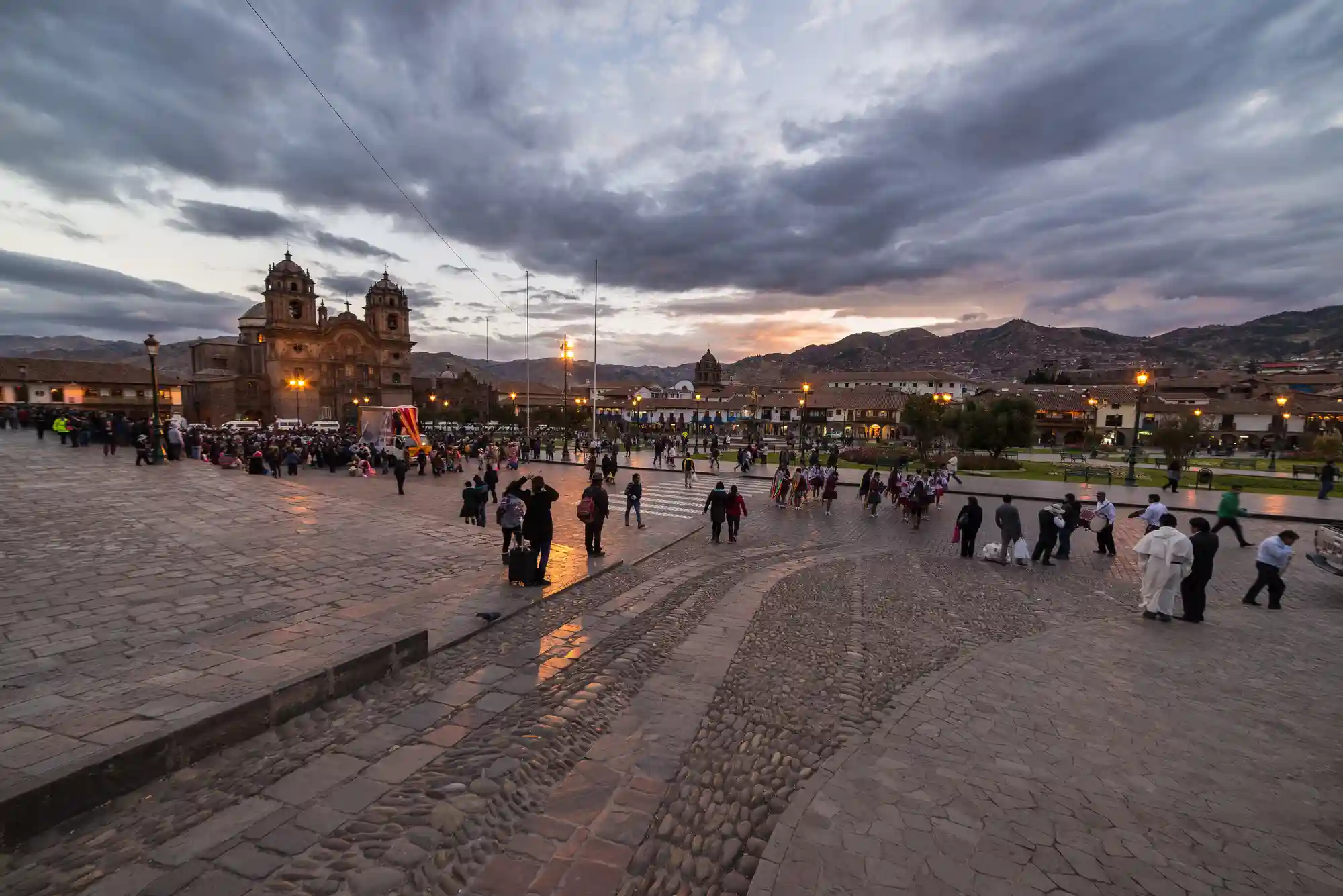
Cusco is famous for its Inca history, colonial architecture and proximity to Machu Picchu, but the city is also one of the most interesting culinary destinations in Peru.
Travelers can find traditional Cusco cuisine, contemporary Peruvian dishes, Nikkei fusion, international food, vegan restaurants, artisan cafés and sophisticated dining experiences. Options range from inexpensive market meals to tasting menus prepared with native Andean ingredients.
Choosing where to eat in Cusco depends on your budget, location and the type of experience you want. This guide explains the best areas for dining, the types of restaurants available and the local dishes you should try during your visit.
What Is Food Like in Cusco?
Cusco cuisine combines ingredients from the Andes with culinary influences from other regions of Peru.
Traditional cooking commonly uses:
- Native potatoes
- Quinoa
- Corn
- Tarwi
- Broad beans
- Trout
- Alpaca
- Cuy
- Andean herbs
- Local cheeses
- Chili peppers
- Dehydrated potatoes
- Seasonal vegetables
Contemporary restaurants often reinterpret these ingredients through modern techniques, while traditional establishments preserve recipes connected with local communities and family celebrations.
Visitors can also find coastal Peruvian food, Amazonian ingredients, Chinese-Peruvian chifa, Japanese-Peruvian Nikkei cuisine and international dishes throughout the historic center.
The Best Areas to Eat in Cusco
Plaza de Armas and the Historic Center
The area around Plaza de Armas has the greatest concentration of restaurants in Cusco.
It is especially convenient for:
- First-time visitors
- Travelers staying in the historic center
- Couples looking for dinner
- Families needing varied menus
- Visitors interested in balcony views
- Travelers who want restaurants within walking distance
Restaurants around the plaza tend to be more expensive than local establishments farther from the center. However, many provide attractive colonial interiors, views over the square and menus adapted to international travelers.
Popular options in and around this area include LIMO, Inkagrill, Morena Peruvian Kitchen and several cafés and restaurants located along Calle Plateros, Portal de Panes and Portal de Carnes. LIMO specializes in Nikkei cuisine and operates from a traditional building overlooking Plaza de Armas, while Inkagrill offers a broad combination of Peruvian and international dishes. (Cusco Restaurants)
Plaza Regocijo
Plaza Regocijo is located only a short walk from Plaza de Armas and is an excellent area for a more relaxed meal.
One of the best-known restaurants here is Chicha, which focuses on regional cuisine and the culinary traditions of Cusco. The restaurant uses local products while presenting traditional flavors through contemporary techniques. (Chicha)
This area is suitable for travelers who want:
- Regional Peruvian cuisine
- A comfortable sit-down meal
- A central location
- Contemporary presentations
- A special lunch or dinner
Reservations are advisable during weekends, holidays and the busiest tourism months.
San Blas
San Blas is one of the most atmospheric neighborhoods in Cusco.
Its narrow streets contain:
- Traditional restaurants
- Vegan establishments
- Small cafés
- Bakeries
- Bars
- Boutique dining rooms
- Restaurants inside colonial courtyards
Pachapapa is one of the neighborhood’s best-known choices for regional Cusco cuisine. It is located beside the San Blas square and serves Andean-inspired food in a colonial courtyard. (Cusco Restaurants)
San Blas is also a good area for vegetarian food, healthy breakfasts and cafés. Remember that the neighborhood is located uphill from Plaza de Armas, and some streets can be steep.
Plazoleta de las Nazarenas
The area around Plazoleta de las Nazarenas is quieter and more refined than Plaza de Armas.
It is home to museums, luxury hotels and several upscale dining options.
MAP Café is located inside the Museum of Pre-Columbian Art and combines contemporary cuisine with a cultural setting inspired by ancient Peruvian art. (Cusco Restaurants)
Nearby, Mauka operates inside Palacio Nazarenas. The restaurant presents native Peruvian and Andean ingredients in modern formats and is associated with Peruvian chef Pía León. (Belmond)
This area is ideal for:
- Romantic dinners
- Special celebrations
- Fine dining
- Travelers interested in contemporary Peruvian cuisine
- Visitors looking for a quieter atmosphere
San Pedro Market
San Pedro Market is one of the best places to experience the everyday food culture of Cusco.
Inside the market, visitors can find:
- Fresh fruit juices
- Soups
- Local breakfasts
- Rice and meat dishes
- Bread
- Cheese
- Tamales
- Choclo
- Seasonal produce
- Affordable set lunches
The market is especially active during the morning and lunchtime. Food stalls generally serve simple dishes rather than elaborate restaurant meals.
For a better experience:
- Choose a busy stall with regular customer turnover.
- Ask what has been prepared recently.
- Select food that is served hot.
- Carry small denominations of Peruvian soles.
- Keep your belongings secure in crowded areas.
- Confirm the price before ordering.
San Pedro Market remains a popular place for local soups, full set meals, juices and traditional ingredients. (Condé Nast Traveler)
Where to Eat Traditional Cusco Food
Traditional Cusco cuisine is filling, flavorful and closely connected with the region’s climate, agriculture and celebrations.
Pachapapa
Pachapapa is a convenient choice for travelers who want regional food in the San Blas neighborhood.
Its menu and setting emphasize:
- Cusco cuisine
- Andean ingredients
- Traditional preparations
- A colonial courtyard
- A relaxed atmosphere
Travelers commonly visit it to try dishes involving alpaca, Andean potatoes and regional preparations. (Cusco Restaurants)
Chicha
Chicha is a good option for visitors who want regional flavors presented in a more contemporary restaurant environment.
The culinary concept highlights the ingredients, traditions and gastronomic knowledge of Cusco. (Chicha)
It is suitable for:
- A special dinner
- Couples
- Food-focused travelers
- Visitors seeking modern regional cuisine
- Groups interested in sharing several dishes
Local Cuyerías
Travelers interested in trying traditional oven-roasted cuy can visit specialized restaurants known as cuyerías.
Some of the most traditional establishments are located outside the tourist center. These restaurants may prepare the cuy after the order is placed, so the meal can require additional waiting time.
Cuy is not simply a dish prepared for tourists. It has long been associated with Andean family events, festivals and important celebrations.
What Traditional Dishes Should You Try?
Cuy al Horno
Cuy al horno is guinea pig seasoned with local herbs and roasted until the exterior becomes crisp.
It may be accompanied by:
- Potatoes
- Corn
- Salad
- Stuffed peppers
- Andean sauces
The animal is often served whole. Travelers uncomfortable with this presentation should ask how the dish will be served before ordering.
Alpaca
Alpaca meat is commonly served as:
- Grilled steak
- Medallions
- Skewers
- Stew
- Carpaccio
- Stir-fry
The quality and tenderness can vary depending on the cut and preparation method. A restaurant specializing in Andean cuisine is generally a better place to try it than an establishment with an extremely large tourist menu.
Chiri Uchu
Chiri uchu is one of Cusco’s most distinctive ceremonial dishes.
It traditionally combines several ingredients, which may include:
- Cuy
- Chicken
- Charqui
- Corn
- Cheese
- Fish roe
- Seaweed
- A corn-based omelet
The dish is especially associated with the Corpus Christi celebrations and may be easier to find during Cusco’s June festivities. (The Only Peru Guide)
Chairo
Chairo is a traditional Andean soup commonly prepared with potatoes, vegetables, meat and chuño.
It is a warming and substantial dish that is especially appealing on cold or rainy days.
Quinoa Soup
Quinoa soup is one of the easiest regional dishes for international visitors to enjoy.
Depending on the restaurant, it may contain:
- Vegetables
- Potatoes
- Cheese
- Herbs
- Chicken
- Broad beans
It is commonly available in traditional restaurants and lunch menus.
Trout
Andean trout may be prepared:
- Grilled
- Fried
- In ceviche
- In a creamy sauce
- With herbs
- With quinoa or native potatoes
Trout is a good alternative for travelers who want a lighter meal than roasted meats.
Choclo con Queso
This simple snack combines large-kernel Andean corn with fresh local cheese.
It can be found in markets, restaurants and tourist attractions around Cusco and the Sacred Valley.
Tamales
Cusco-style tamales may be sweet or savory.
They are commonly eaten for breakfast or as a snack and can be found in markets, bakeries and small traditional food shops.
Where to Eat Contemporary Peruvian Food
Morena Peruvian Kitchen
Morena offers modern Peruvian cuisine inspired by flavors from the coast, Andes and Amazon.
The restaurant has a youthful, contemporary approach while maintaining a strong connection with Peruvian ingredients and hospitality. (Grupo Morena)
It is a suitable option for:
- Couples
- Groups of friends
- First-time visitors to Peru
- Travelers who want attractive food presentation
- Visitors looking for a modern atmosphere
Organika
Organika is a popular choice for travelers interested in fresh ingredients and lighter Peruvian dishes.
Its concept is often associated with locally sourced produce, creative presentations and options suitable for different dietary preferences. (Organika Cusco)
Because the dining space can be small, booking ahead or arriving outside the busiest dinner hours may be useful.
Inkagrill
Inkagrill is located at Plaza de Armas and offers a combination of Peruvian and international food.
Its varied menu can be useful for:
- Families
- Groups with different preferences
- Travelers with children
- Visitors seeking a central restaurant
- People who want familiar and local options together
The restaurant has operated in the city for more than two decades and is part of an established Cusco restaurant group. (Cusco Restaurants)
Where to Eat Nikkei and Asian-Peruvian Food
Peru has strong Japanese and Chinese culinary influences. In Cusco, visitors can find both Nikkei and chifa restaurants.
LIMO
LIMO combines Japanese culinary techniques with ingredients from Peru’s coast and Andes.
Its location overlooking Plaza de Armas makes it particularly attractive for:
- Sunset drinks
- Dinner with a view
- Sushi and sashimi
- Nikkei dishes
- Couples and small groups
The restaurant is located on the second floor of a traditional building beside the main square. (Cusco Restaurants)
KION
KION specializes in Peruvian-Chinese cuisine, commonly known as chifa.
Typical chifa dishes may include:
- Arroz chaufa
- Stir-fried noodles
- Wontons
- Sweet-and-sour preparations
- Meat and vegetable stir-fries
It is a useful option for groups that want generous dishes designed for sharing. KION remains part of the current Cusco Restaurants portfolio. (Cusco Restaurants)
Where to Eat Vegetarian and Vegan Food
Cusco has a surprisingly broad selection of vegetarian and vegan restaurants.
Green Point
Green Point is one of the city’s most established plant-based restaurants.
Its menu includes vegan interpretations of familiar dishes alongside international and contemporary Peruvian options. (Green Point)
It is recommended for:
- Vegan travelers
- Vegetarians
- Groups with mixed dietary needs
- Visitors looking for creative plant-based food
- Travelers who want a lighter meal
Organika
Organika offers several dishes built around fresh vegetables, grains and local produce.
Although it is not exclusively vegan, it can be suitable for groups containing both vegetarian and non-vegetarian diners. (Organika Cusco)
Rúcula and Other Healthy Restaurants
The historic center and San Blas contain many smaller restaurants focused on salads, bowls, soups, vegetarian menus and fresh juices.
Menus can change frequently, so travelers with strict dietary requirements should clearly explain whether they avoid:
- Meat
- Chicken stock
- Fish
- Eggs
- Dairy products
- Gluten
- Cross-contamination
Useful Spanish phrases include:
- Soy vegetariano/a: I am vegetarian.
- Soy vegano/a: I am vegan.
- Sin carne: Without meat.
- Sin leche ni queso: Without milk or cheese.
- Sin gluten: Gluten-free.
- ¿Contiene caldo de pollo?: Does it contain chicken stock?
Where to Eat for a Special Occasion
Mauka
Mauka is one of the principal options for a sophisticated culinary experience in Cusco.
Located inside Palacio Nazarenas, it uses Andean ingredients and contemporary culinary techniques in an elegant setting. (Belmond)
It is best suited for:
- Anniversaries
- Honeymoons
- Birthday dinners
- Fine-dining enthusiasts
- Travelers interested in native ingredients
MAP Café
MAP Café combines contemporary cuisine with the atmosphere of the Museum of Pre-Columbian Art.
Its glass-enclosed dining space and cultural setting make it a distinctive option for a special lunch or dinner. (Cusco Restaurants)
Cicciolina
Cicciolina is a long-established restaurant in the historic center offering Mediterranean-Andean fusion, tapas and an artisan café concept. (Cicciolina Cusco)
It works well for:
- Sharing small dishes
- Wine and tapas
- Couples
- Small groups
- Travelers looking for fusion cuisine
Best Places for Breakfast and Coffee
Cusco has a growing café culture, particularly around San Blas and the historic center.
Travelers can find:
- Peruvian coffee
- Fresh bread
- Eggs
- Avocado toast
- Pancakes
- Yogurt bowls
- Fruit bowls
- Pastries
- Breakfast burritos
- Vegetarian breakfasts
The San Pedro Market is a good option for a traditional and economical breakfast, while San Blas is better for artisan coffee and relaxed cafés.
For an early tour departure, ask your hotel whether it offers:
- A packed breakfast
- Early coffee service
- Fruit to take away
- Sandwiches
- A breakfast box
Many mountain and Machu Picchu tours depart before regular restaurant opening hours.
Where to Eat on a Budget
Travelers do not need to visit expensive restaurants to eat well in Cusco.
Affordable options include:
- San Pedro Market
- Small neighborhood restaurants
- Bakeries
- Local lunch menus
- Pollerías
- Chifa restaurants
- Sandwich shops
- Street snacks
- Simple cafés
Look for signs advertising menú del día. This generally refers to a fixed lunch that may include:
- Soup or starter
- Main course
- Drink
- Occasionally a small dessert
Restaurants outside Plaza de Armas usually provide better value than establishments directly overlooking the square.
Food Safety Tips
Travelers should use normal food-safety precautions, especially during the first days of the trip.
Consider the following:
- Choose restaurants and stalls that appear busy.
- Eat meat, fish and eggs that are properly cooked.
- Be cautious with food that has remained uncovered.
- Drink bottled, filtered or properly treated water.
- Check that bottled water is sealed.
- Wash or peel fruit before eating it.
- Inform restaurant staff about serious allergies.
- Avoid eating an unusually heavy meal immediately before a long trek.
- Carry hand sanitizer for markets and excursions.
Travelers with severe food allergies should carry a translated allergy card explaining the ingredients they must avoid.
Do You Need Restaurant Reservations?
Reservations are recommended for:
- Chicha
- Cicciolina
- Mauka
- MAP Café
- Morena
- LIMO
- Special Christmas or New Year dinners
- Large groups
- Weekend dinners
Casual cafés, markets and local lunch restaurants usually do not require advance booking.
Restaurant schedules, menus and operating days can change, so confirm directly before traveling across the city for a particular establishment.
Suggested One-Day Food Experience in Cusco
Breakfast
Begin at San Pedro Market with:
- Fresh fruit juice
- Tamales
- Bread with cheese
- A traditional soup
Mid-Morning Coffee
Walk toward San Blas and stop at a small café for:
- Peruvian coffee
- Pastry
- Light snack
Lunch
Choose a regional restaurant such as Pachapapa or Chicha and try:
- Quinoa soup
- Alpaca
- Trout
- Native potatoes
- Choclo with cheese
Afternoon Snack
Try:
- Chocolate made with Peruvian cacao
- Coffee
- Empanada
- Local dessert
Dinner
Select a restaurant according to your interests:
- LIMO for Nikkei cuisine and views
- Morena for modern Peruvian food
- Green Point for plant-based dining
- Mauka for a special experience
- Cicciolina for tapas and fusion cuisine
How to Choose the Right Restaurant
Before selecting where to eat, consider:
- Your budget
- Dietary restrictions
- Distance from your hotel
- Whether you need a reservation
- The type of cuisine
- Portion size
- Restaurant atmosphere
- Whether you want a view
- Whether you are eating before a trek
- Your departure time the following morning
Avoid choosing a restaurant only because an employee is inviting visitors from the street. Review the menu, prices and atmosphere before entering.
Final Recommendations
Cusco offers food experiences for every type of traveler.
For traditional regional cuisine, consider Chicha or Pachapapa. For modern Peruvian food, Morena and Organika are strong options. LIMO is suitable for Nikkei cuisine with a central view, while Green Point is one of the principal choices for vegan dining. Mauka, MAP Café and Cicciolina are appropriate for special meals.
Do not limit your experience to restaurants around Plaza de Armas. Visit San Pedro Market, explore the cafés of San Blas and try at least one traditional Cusco dish.
A good Cusco food itinerary should combine:
- One market meal
- One traditional Andean restaurant
- One contemporary Peruvian restaurant
- One local snack
- One cup of Peruvian coffee
- One special dinner
Eating in Cusco is not simply a practical part of the trip. It is an opportunity to understand the region through its ingredients, traditions and evolving culinary culture.


Deja un comentario